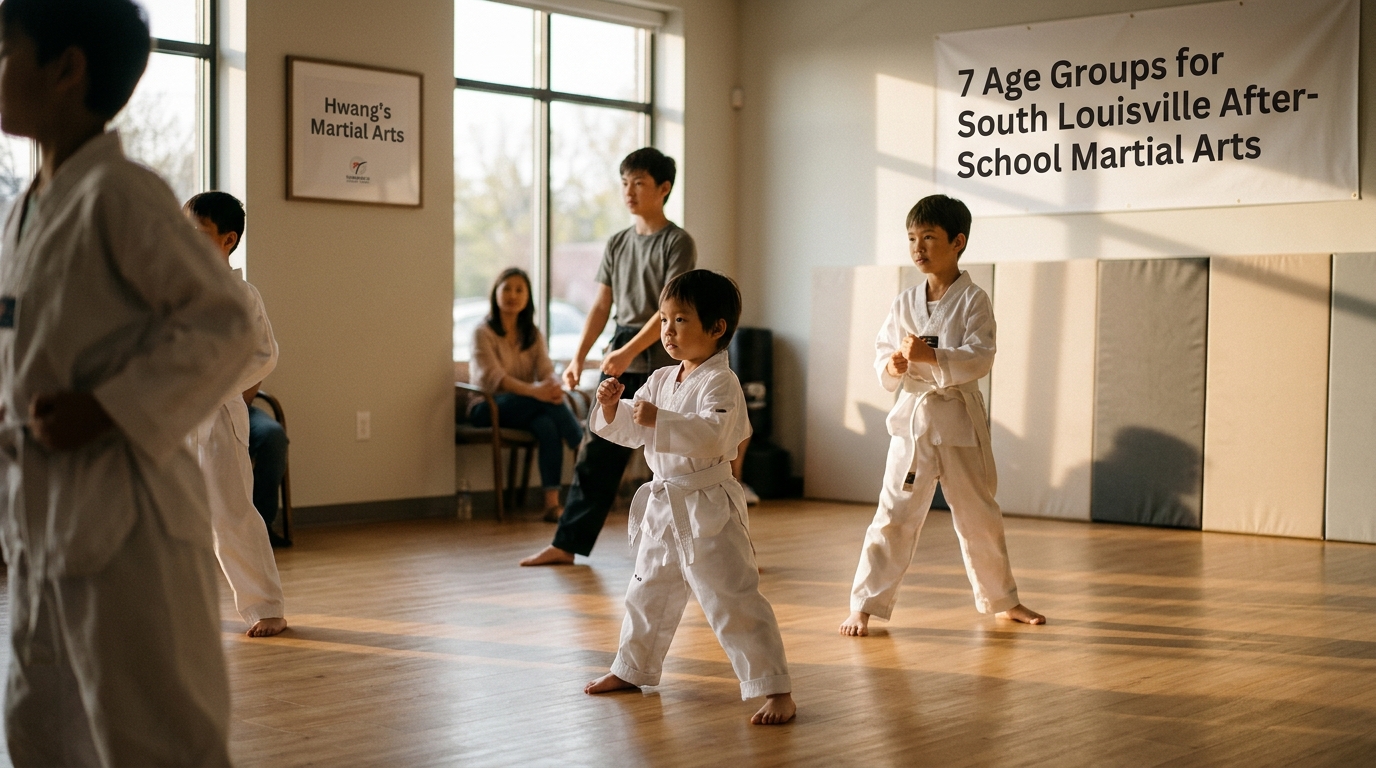
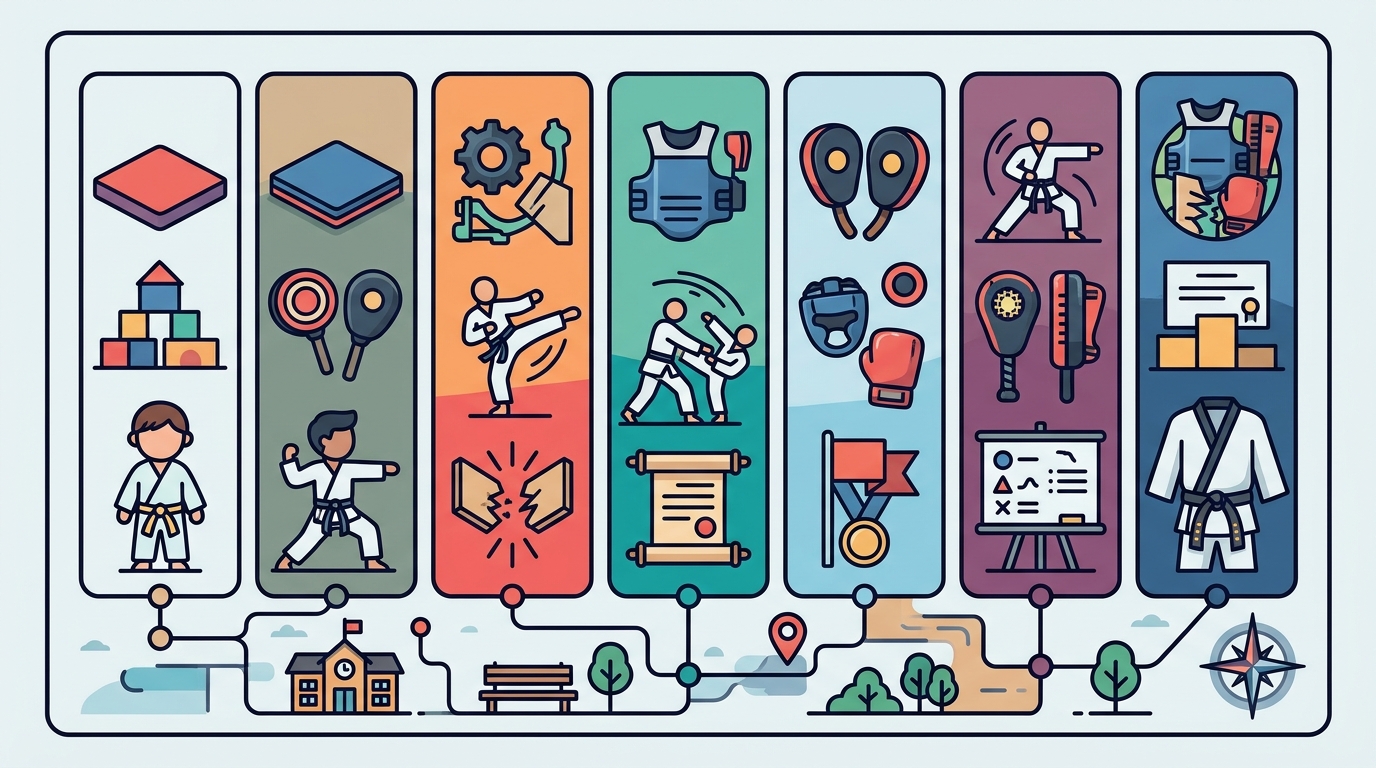
South Louisville parents often wonder which specific age brackets local martial arts schools accept for after-school care. Hwang's Martial Arts serves families across the region with programs tailored to distinct developmental stages. This guide outlines the seven primary age groups that define after-school martial arts participation in the area.
1. Preschoolers (Ages 3 to 4)
Focus on foundational motor skills and socialization. Programs for this group emphasize basic movement, listening skills, and respect for peers. Instructors use play-based learning to introduce the concept of discipline without overwhelming young children. This stage is critical for building initial confidence in a structured environment.
2. Early Elementary (Ages 5 to 6)
Development of focus and basic self-defense awareness. Children in this bracket begin to understand complex instructions and can follow multi-step routines. Martial arts classes at this level introduce simple forms and basic self-defense concepts. The after-school setting provides a safe space for these young students to release energy constructively.
3. Mid-Elementary (Ages 7 to 8)
Building resilience and peer interaction skills. This age group faces increased social challenges, making martial arts an ideal outlet for learning conflict resolution. Students begin to earn their first belts, which fosters a sense of achievement and pride. The structured nature of the program helps them manage frustration and develop patience.
4. Upper Elementary (Ages 9 to 10)
5. Pre-Teens (Ages 11 to 12)
Navigating identity and building leadership qualities. This transitional age group benefits from the mentorship provided by senior students and instructors. Martial arts offers a platform for developing leadership skills and a strong sense of self. The physical activity helps manage the stress associated with the transition to middle school.
6. Early Teens (Ages 13 to 14)
Developing practical self-defense and stress management. Teenagers in this bracket often seek autonomy and respect from their peers. Martial arts training provides a respectful community where they can build confidence and learn practical self-defense skills. The discipline required in training translates to better decision-making in daily life.
7. Older Teens (Ages 15 to 18)
Mastering advanced techniques and life skills. High school students use martial arts to build physical strength and mental resilience. The program offers a supportive environment for those who may not fit into traditional sports. Older teens often take on roles as junior instructors, further solidifying their leadership and communication skills.
Choosing the Right Age Group
Select the program that aligns with your child's current developmental stage and specific goals. Hwang's Martial Arts offers age-specific classes to ensure every student receives appropriate instruction and attention. To find the best fit for your family, to discuss available schedules and locations.
Frequently Asked Questions
What is the minimum age for after-school martial arts?
Most programs, including those at Hwang's Martial Arts, accept children as young as 3 years old. These early classes focus on fun, focus, and foundational skills in a supportive environment.
Do after-school programs accept teenagers?
Yes, many schools offer programs for teens up to age 18. These classes often focus on self-defense, fitness, and leadership development for high school students.
Is martial arts suitable for non-athletic children?
Absolutely. Martial arts builds coordination, balance, and confidence at any fitness level. Classes are designed so beginners can progress at their own pace while feeling successful and included.
How does martial arts help with after-school behavior?
Martial arts teaches peace, respect, and self-control. Students learn how to avoid conflict and manage their energy, which often leads to improved behavior at home and in school.
What should I look for in an after-school martial arts program?
Look for age-specific classes, certified instructors, and a safe, structured environment. A good program balances physical training with character development and provides clear progress milestones.