
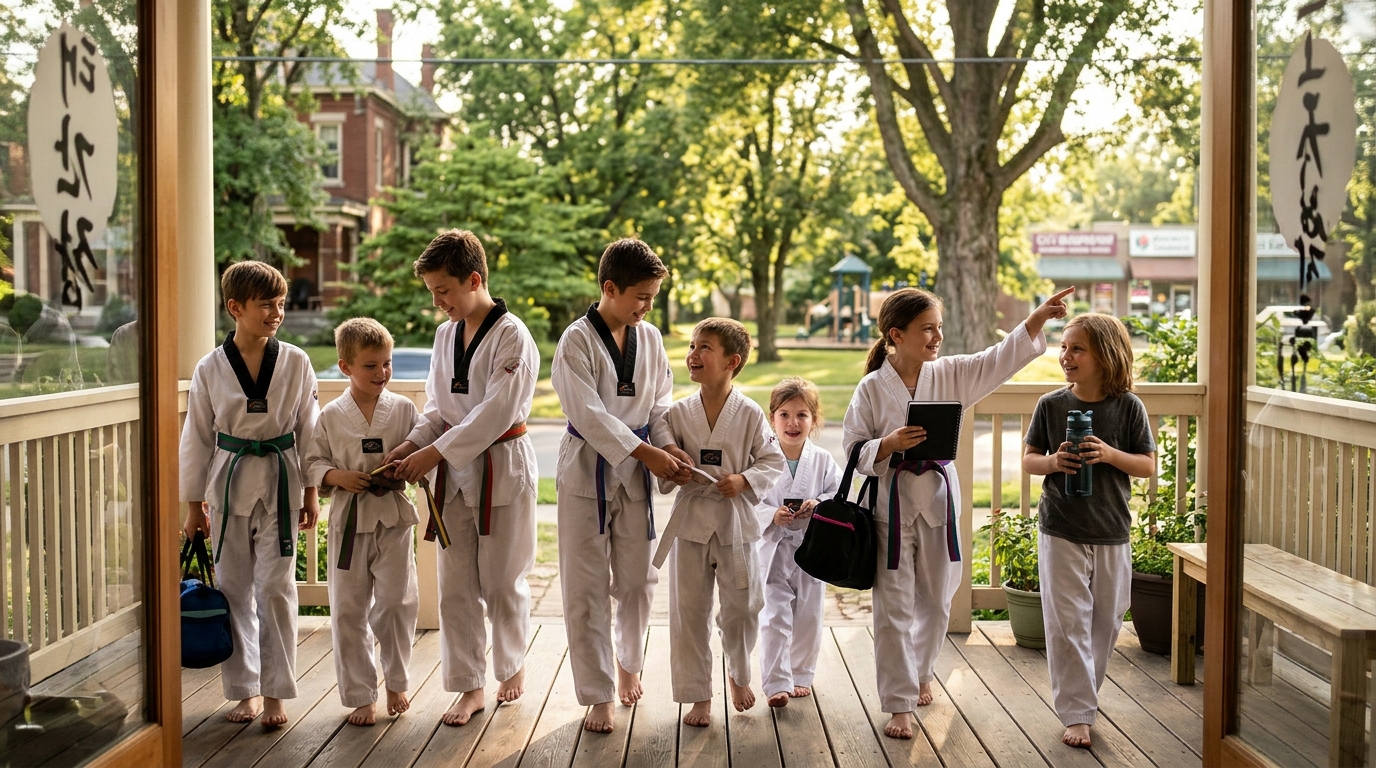
Parents in Louisville often wonder when their children can start martial arts training. Hwang's Martial Arts offers structured programs for specific age brackets to ensure safety and developmental appropriateness. This guide outlines the seven distinct age groups that benefit from youth martial arts instruction in the Louisville area.
1. Preschoolers (Ages 3-4)
Focus on foundational motor skills and socialization. Martial arts for the youngest students is a developmental activity rather than a combat sport. Instructors use games and stories to teach basic balance, listening, and respect. These classes help children build confidence in a safe, low-pressure environment.
2. Early Elementary (Ages 5-6)
Introduction to formal techniques and discipline. At this stage, children begin learning the basics of Taekwondo, Judo, or Hapkido. The curriculum emphasizes focus and self-control, which often translates to better behavior in the classroom. Students start their journey toward earning their first belt. For additional details, review the Contact Hwang s Martial.
3. Mid Elementary (Ages 7-8)
Development of coordination and teamwork. Students in this age group have the physical maturity to learn more complex movements. Classes introduce partner drills and basic self-defense concepts. This is a critical period for building the habit of consistent practice.
4. Upper Elementary (Ages 9-10)
Refinement of skills and competitive readiness. Older elementary students can handle more rigorous physical training. They begin to understand the philosophy behind the martial arts they practice. Many students in this group start participating in local tournaments or demonstrations.
5. Pre-Teens (Ages 11-12)
Building resilience and leadership skills. As children approach adolescence, martial arts provides a healthy outlet for energy and stress. Instructors focus on character development, teaching students how to handle pressure and setbacks. This group often takes on roles as junior leaders in the class.
6. Early Teens (Ages 13-14)
Transition to advanced training and fitness goals. Teens in this bracket often join classes specifically for fitness and self-defense. The training becomes more intense, focusing on strength, speed, and precision. Students may begin to specialize in a specific discipline like Judo or Taekwondo.
7. Late Teens (Ages 15-17)
Mastery of techniques and college preparation. High school students use martial arts to maintain peak physical condition and mental clarity. The discipline learned on the mat supports academic success and time management. Many students in this group aim for higher black belt ranks or competitive titles.
Choosing the Right Age Group
Select the age group that matches your child's current developmental stage. While some schools allow flexible placement, staying within the designated bracket ensures the curriculum is appropriate for your child's physical and cognitive abilities. Hwang's Martial Arts in Louisville provides age-specific classes to support every stage of youth development.
Frequently Asked Questions
What is the minimum age for martial arts classes in Louisville?
Most schools, including Hwang's Martial Arts, accept children as young as three years old. These early classes focus on fun and basic motor skills rather than combat techniques.
Can my child switch age groups if they are more advanced?
Yes, instructors can assess your child's skill level and place them in a more advanced class if they are ready. This ensures they are challenged appropriately without being overwhelmed.
Do martial arts classes help with school performance?
Yes, the discipline and focus required in martial arts often improve a child's ability to concentrate in school. Many parents report better grades and behavior after their child starts training.
Is martial arts safe for young children?
Yes, when taught by certified instructors in a controlled environment. Safety is the top priority, and instructors use age-appropriate methods to prevent injury while teaching self-defense.
What should my child wear to their first class?
Most schools provide a uniform for new students. You should bring comfortable athletic wear, a water bottle, and a positive attitude for the first trial class.