
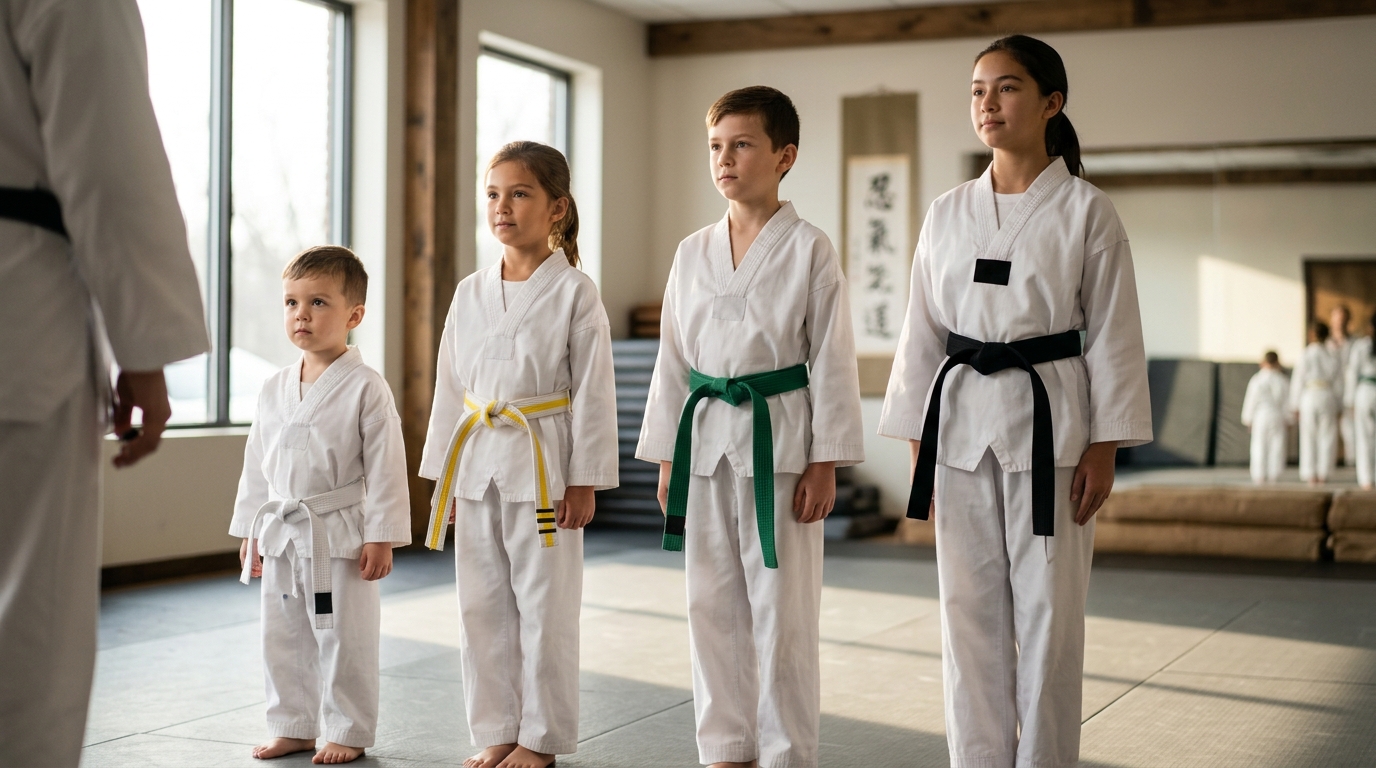
Parents in Louisville often ask what martial arts age groups and skill levels are available for their children. Hwang's Martial Arts offers structured programs for children as young as three years old, progressing through teen and adult levels. This guide explains how to match your child's developmental stage with the right training environment.
Early Years: Building Foundations (Ages 3-5)
For the youngest students, martial arts is less about combat and more about developmental milestones. A preschool martial arts program is a structured environment that introduces basic motor skills, listening habits, and respect. At this stage, children are learning to follow instructions and control their bodies in a safe space.
Hwang's Martial Arts designs classes for this age group to be playful yet focused. Instructors use games and stories to teach the basics of Taekwondo, Judo, and Hapkido. The goal is to create a positive first impression of discipline. Children learn to bow, listen to cues, and perform simple movements. This foundation is critical for their future success in any structured activity.
Parents should look for classes that prioritize fun and safety over intensity. The physical demands should be low, allowing children to explore their bodies without risk of injury. The social aspect is equally important, as these early classes help shy children build confidence in a group setting.
Elementary Years: Skill Development (Ages 6-12)
As children enter elementary school, their cognitive and physical abilities expand rapidly. This is the prime age for learning complex techniques and earning belt ranks. A youth martial arts curriculum is a progressive system that rewards consistency and effort with visible achievements. Students begin to understand the concept of rank and the responsibilities that come with it.
At Hwang's, students in this age group train in dedicated kids' classes. They learn self-defense techniques, forms, and sparring fundamentals. The curriculum is designed to build coordination and focus, which often translates to better performance in school. Many parents report that their children become more disciplined and less impulsive after a few months of training.
It is important to note that sparring is typically introduced gradually. According to the American Academy of Pediatrics, sparring is not generally recommended until children are at least 8 to 10 years old, depending on the specific martial art. Hwang's follows these safety guidelines, ensuring that younger children focus on technique and control before engaging in competitive sparring.
Teen Years: Discipline and Identity (Ages 13-18)
Adolescence is a time of significant physical and emotional change. Teen martial arts is a training path that helps young adults channel their energy into positive outlets. Teens often seek independence and respect, which martial arts provides through a clear hierarchy and a focus on personal growth. The training environment becomes a second family, offering mentorship and peer support. according to Frontiers Martial arts
Hwang's offers specific programs for teens and adults, allowing older students to train with intensity and purpose. Teens learn advanced self-defense, fitness, and mindset exercises. The focus shifts from basic movements to practical application and mental resilience. This is a critical time for building character, as the habits formed now often last a lifetime.
Parents should encourage their teens to view martial arts as a tool for self-improvement, not just a sport. The discipline required to maintain a training schedule helps teens manage stress and build confidence. Many students find that the respect they earn on the mat helps them navigate social challenges at school and in their communities.
Understanding Skill Levels and Belt Ranks
Martial arts uses a belt ranking system to track progress. A belt rank is a standardized measure of a student's technical proficiency and understanding of the art. The system provides clear goals and a sense of accomplishment. Students start with a white belt and progress through colored belts to the black belt.
Each belt represents a specific set of skills and knowledge. For example, a yellow belt might indicate a student has mastered basic kicks and blocks, while a green belt might require more complex forms and self-defense techniques. The progression is not just about physical ability; it also includes understanding the philosophy and history of the martial art.
At Hwang's, students can earn belts in Taekwondo, Judo, and Hapkido. The school offers a comprehensive system that allows students to explore multiple disciplines. This flexibility is a major advantage for families, as it allows children to find the style that best fits their interests and physical attributes. The belt system provides a clear roadmap for long-term commitment and achievement.

Choosing the Right Program for Your Child
Selecting the right martial arts program requires more than just checking the schedule. A quality martial arts school is one that prioritizes safety, respect, and individualized instruction. Parents should visit the school, observe a class, and speak with the instructors. The culture of the school should be positive and encouraging, with a focus on character development.
Hwang's Martial Arts has served Louisville families since 1997, offering a proven track record of success. The school is led by Grandmaster Jung Oh Hwang, a 1984 Olympic Silver Medalist in Judo. This Olympic-level expertise ensures that students receive high-quality instruction. The school's three locations in Louisville provide convenient access for families across the city.
Parents should also consider the school's approach to safety and inclusion. A good school welcomes students of all fitness levels and backgrounds. The instructors should be trained in child development and able to adapt their teaching to different learning styles. By choosing a school with a strong reputation and experienced instructors, parents can ensure their child has a positive and transformative experience.
Key Takeaways
- Preschool programs (ages 3-5) focus on motor skills, listening, and respect.
- Elementary programs (ages 6-12) emphasize skill development, belt ranks, and school performance.
- Teen programs (ages 13-18) build discipline, identity, and mental resilience.
- Sparring is typically introduced around ages 8-10, following safety guidelines.
- Belt ranks provide a clear roadmap for progress and achievement.
- Hwang's Martial Arts offers programs in Taekwondo, Judo, and Hapkido for all ages.
- Choosing a school with experienced instructors and a positive culture is crucial.
Frequently Asked Questions
What is the minimum age to start martial arts?
Hwang's Martial Arts offers programs for children as young as 3 years old. These early classes focus on fun, focus, and foundational skills.
Does my child need to be athletic to join?
No, martial arts builds coordination, balance, and confidence at any fitness level. Classes are designed for beginners to progress at their own pace.
What martial arts styles does Hwang's teach?
Hwang's teaches Taekwondo, Judo, and Hapkido, allowing students to explore multiple disciplines under one roof.
When do children start sparring?
Sparring is generally introduced when children are between 8 and 10 years old, depending on their maturity and skill level.
How many locations does Hwang's have in Louisville?
Hwang's has three locations in Louisville: Jeffersontown, East End, and Okolona (Preston Highway).
Can parents watch the classes?
Yes, parents are welcome to observe classes and can also train in separate adult classes at the same time.
Start Your Child's Journey Today
Choosing the right martial arts program is a significant decision for your family. By understanding the age groups and skill levels available, you can make an informed choice that supports your child's growth. Hwang's Martial Arts is committed to providing a safe, respectful, and effective training environment for students of all ages. To see the difference for yourself, to schedule a trial class or tour one of our Louisville locations. according to Are Martial Arts