
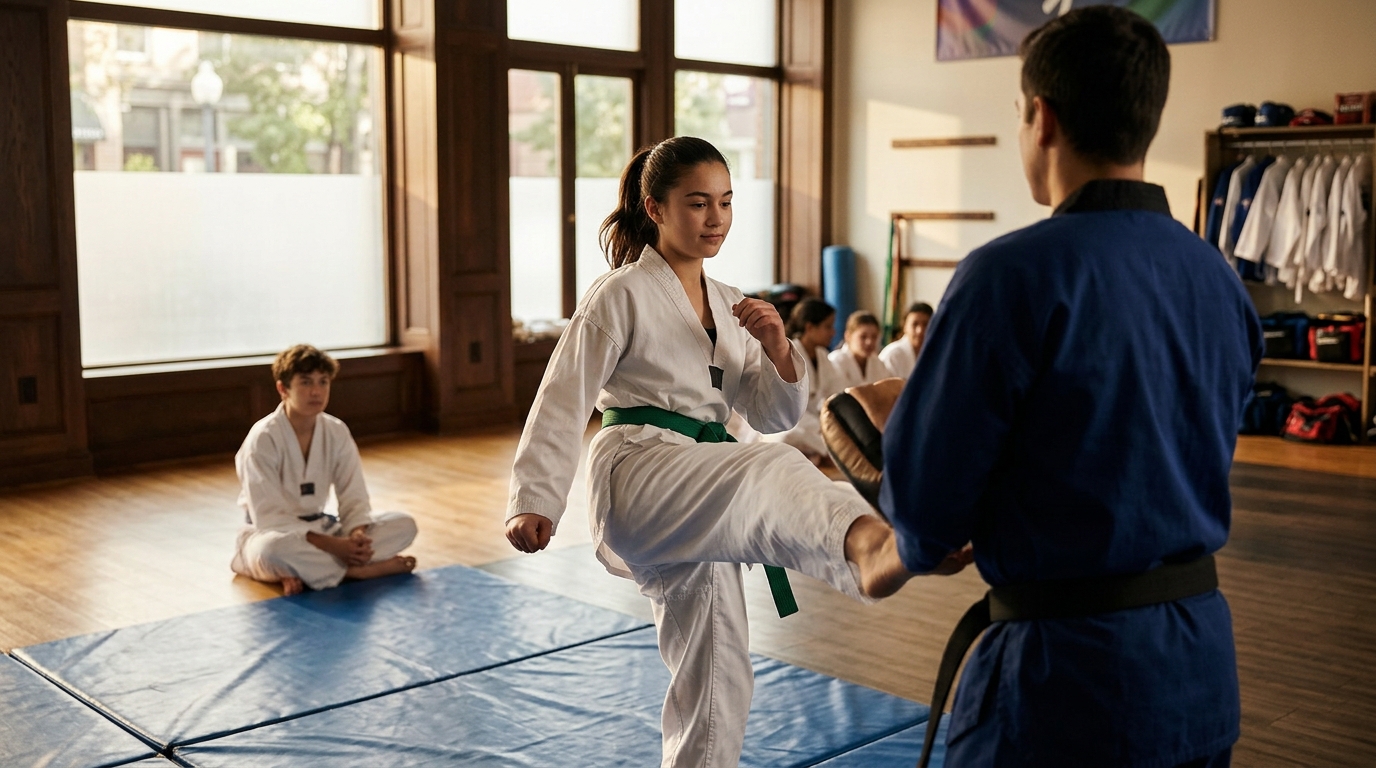
Choosing the right martial arts program is a critical step for parents seeking to boost their teen's self-esteem. In Louisville, Kentucky, Hwang's Martial Arts offers specialized training for ages 13 and up. This guide explores how specific disciplines, including Taekwondo and Judo, foster mental resilience and physical capability. We will examine the mechanics of confidence building, compare key styles, and detail the self-defense skills that empower young adults.
The Psychology of Confidence Building
Confidence is a psychological state characterized by self-assurance and the belief in one's own abilities. For teenagers, this trait is often fragile due to social pressures and academic demands. Martial arts provides a structured environment where confidence is earned through measurable progress rather than given. The core mechanism is the mastery of difficult physical tasks. When a teen successfully executes a complex technique, their brain releases dopamine, reinforcing the behavior and building a sense of competence.
Overcoming the Fear of Failure
Adolescents often avoid new challenges to protect their ego. In a dojang, failure is a standard part of the learning process. Instructors at Hwang's Martial Arts emphasize that falling is part of rising. This reframing helps teens view setbacks as data rather than personal flaws. The supportive community ensures that no student is mocked for struggling, creating a safe space for vulnerability.
Physical and Mental Synchronization
True confidence requires alignment between the body and the mind. Many teens feel disconnected from their physical selves. Martial arts training forces them to pay attention to their posture, breathing, and movement. This mindfulness practice reduces anxiety and improves focus. As their physical control improves, their mental clarity follows. The result is a teen who feels grounded and capable in both the gym and the classroom.
Brazilian Jiu Jitsu and Ground Control
Brazilian Jiu Jitsu is a grappling martial art that focuses on ground fighting and submission holds. While Hwang's Martial Arts primarily teaches Taekwondo, Judo, and Hapkido, the principles of grappling are relevant to understanding comprehensive self-defense. BJJ teaches students how to control an opponent without striking. This is a crucial skill for de-escalating conflicts. For a teen, the ability to neutralize a threat calmly is a powerful confidence booster. It removes the fear of physical confrontation by providing a technical solution.
The Science of Leverage
BJJ relies on leverage and timing rather than raw strength. This is particularly beneficial for smaller teens who may feel physically outmatched. Learning that technique can overcome size creates a profound sense of empowerment. It shifts the teen's mindset from "I am small" to "I am technical." This intellectual approach to physical defense appeals to many students who prefer strategy over brute force.
Comparison of Grappling Styles
| Style | Primary Focus | Confidence Benefit |
|---|---|---|
| Brazilian Jiu Jitsu | Ground control and submissions | Technical superiority over size |
| Judo | Throws and takedowns | Balance and spatial awareness |
| Hapkido | Joint locks and escapes | Defensive versatility |
Taekwondo: Precision and Discipline
The Role of Discipline
Discipline is the habit of doing what needs to be done, even when you do not feel like it. Taekwondo training instills this habit through daily practice. Teens learn to respect the process, not just the outcome. This discipline translates to other areas of life, such as studying and work ethic. The structured environment of the class provides a routine that many teens find stabilizing. It offers a predictable space in an unpredictable world.
Competitive and Non-Competitive Paths
Practical Self-Defense Skills
Self-defense is the practice of protecting oneself from physical harm. For teens, self-defense is not just about fighting; it is about awareness and avoidance. The most important skill is among the ability to recognize danger before it happens. Martial arts training heightens a teen's situational awareness. They learn to read body language and environmental cues. This heightened awareness makes them feel safer in public spaces. Knowing they can protect themselves reduces anxiety and fear.
De-escalation Techniques
Effective self-defense starts with de-escalation. Teens learn how to use their voice and body language to defuse a tense situation. They are taught to create distance and avoid confrontation when possible. These non-violent skills are crucial for navigating social conflicts. They empower teens to handle bullying or aggressive peers without resorting to violence. This ability to manage conflict calmly is a key component of social confidence.
Physical Defense Techniques
When de-escalation fails, physical defense becomes necessary. Hwang's Martial Arts teaches practical techniques for escaping grabs and strikes. These techniques are designed to be used in real-world scenarios. They are simple, effective, and easy to remember under stress. The repetition of these drills builds muscle memory. This ensures that a teen's body reacts correctly when it matters most. The knowledge that they have a plan for physical threats is a significant confidence booster.
Navigating Teen Age Ranges
Teenage development is not a monolith. The needs of a 13-year-old differ significantly from those of a 17-year-old. Understanding these age ranges helps parents choose the right program. Hwang's Martial Arts offers programs for ages 13 and up, but the focus shifts as students mature. Younger teens (13-15) often need more structure and social support. Older teens (16-18) may seek more intensity and independence. A good program adapts to these developmental stages.
Early Teens: Building Foundations
Early teens are navigating the transition from childhood to adolescence. They are often self-conscious and sensitive to peer judgment. Martial arts provides a non-judgmental space where they can belong. The focus at this age is on basic skills and building camaraderie. Instructors emphasize encouragement and positive reinforcement. This helps early teens build a solid foundation of confidence. They learn that they are capable and valued members of the community.
Later Teens: Refining Identity
Key Takeaways
- Confidence is built through the mastery of difficult physical tasks and measurable progress.
- Martial arts provides a safe environment where failure is viewed as a learning opportunity.
- Taekwondo offers clear milestones through the belt system, providing constant motivation.
- Grappling arts like Judo and Hapkido teach leverage, empowering smaller students.
- Discipline learned in the dojang translates to academic and professional success.
- Programs should adapt to the developmental stage of the teen, from early to late adolescence.
- A supportive community is essential for building social confidence and belonging.
Frequently Asked Questions
What is the best martial art for teen confidence?
There is no single best art, but Taekwondo and Judo are highly effective. Taekwondo builds confidence through visible skill and belt progression. Judo builds confidence through technical control and balance. The best choice depends on the teen's personal interests and goals.
Do I need to be athletic to start?
No, you do not need to be athletic to start. Martial arts is designed for all fitness levels. Instructors modify techniques to suit each student's ability. The goal is progress, not perfection. Most students see significant improvement in fitness within the first few months.
How long does it take to see confidence improvements?
Many students report feeling more confident within the first few weeks. This is due to the supportive environment and early successes. Significant changes in self-esteem often occur after three to six months of consistent training. The key is consistency and patience.
Is martial arts safe for teens?
Yes, martial arts is safe when taught by qualified instructors. Safety is the top priority in every class. Instructors use proper supervision and safety protocols. The risk of injury is low when students follow instructions and warm up properly.
Can martial arts help with bullying?
Yes, martial arts can help with bullying. It builds the physical and mental strength to stand up for oneself. It also teaches de-escalation skills to avoid conflict. The confidence gained in the dojang often translates to better handling of social challenges at school.
What should I wear to my first class?
For your first class, wear comfortable athletic clothing. You do not need a uniform for the trial. Most schools provide a uniform after you enroll. Comfortable shoes are usually required, though some styles may require bare feet. Check with the specific school for their dress code.
Conclusion
Building confidence in teens is a multifaceted process that requires the right environment and tools. Martial arts offers a proven path to self-assurance, discipline, and safety. By choosing a program that aligns with their interests and developmental stage, parents can empower their teens to thrive. Hwang's Martial Arts in Louisville provides the expertise and support needed for this journey. We invite you to explore our teen and adult programs and see the difference for yourself. Start your trial today and watch your teen transform.