
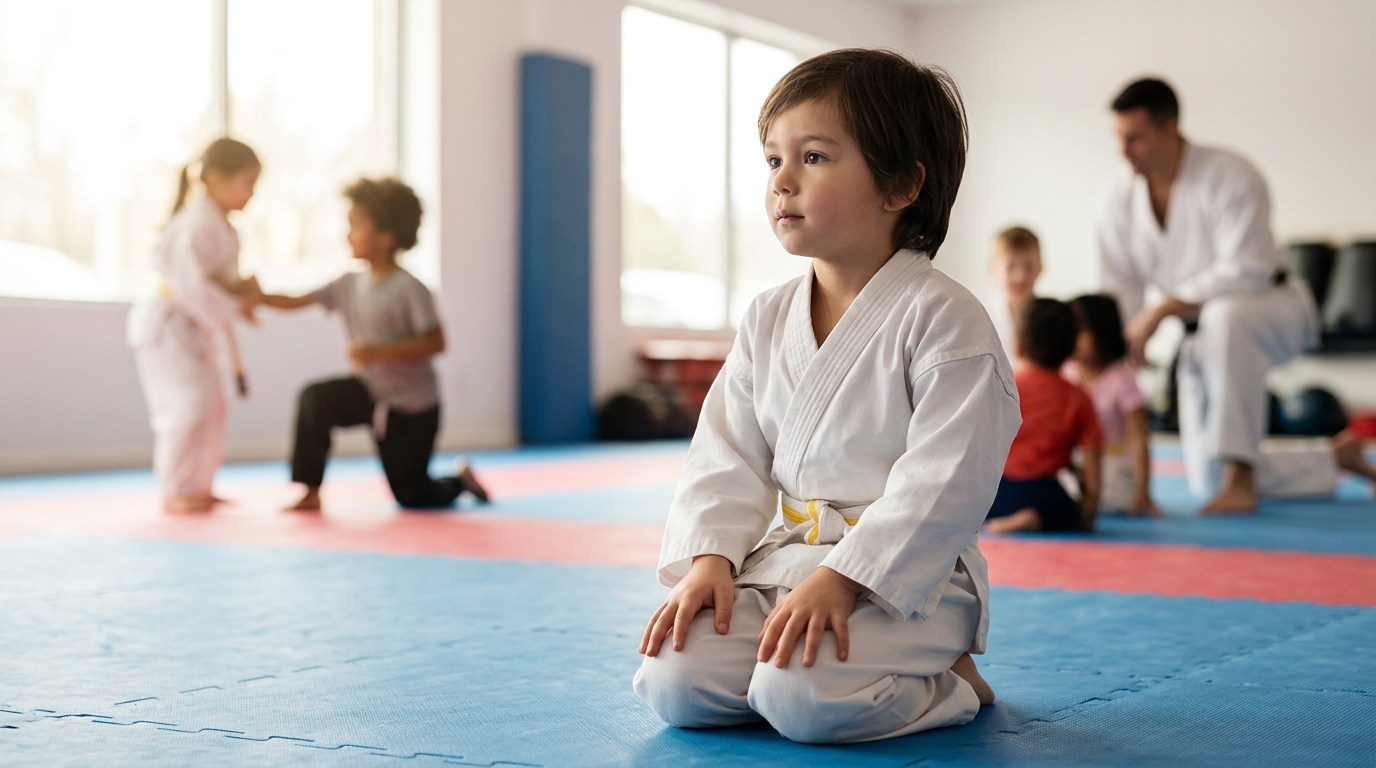
Children can begin martial arts training as early as age three, but the ideal age for after-school classes depends on developmental readiness. Most experts recommend starting between ages four and six to maximize cognitive and physical benefits. Hwang's Martial Arts in Louisville offers age-specific programs that align with these developmental milestones, ensuring children build confidence and focus effectively.
Developmental Readiness for Early Training
Early childhood is a critical period for motor skill development. Motor coordination is the ability to control body movements with precision. Research indicates that children between the ages of four and six are in a prime window for developing these skills. At this stage, the brain is highly plastic, allowing for rapid learning of complex movements like kicks and blocks. Starting too early, such as at age three, may focus more on play than structure, while starting too late can miss this peak learning window. according to Martial Arts and
At Hwang's Martial Arts, our youngest students begin in programs designed for ages three and up. These classes emphasize fun and foundational skills rather than rigorous discipline. This approach respects the child's developmental stage while introducing them to the environment. Parents should look for programs that adapt to the child's pace rather than forcing adult-like expectations on young children.
Cognitive Benefits of After-School Structure
After-school hours often present a challenge for parents and children alike. Executive function is the set of mental skills that helps us manage ourselves and our environment. Martial arts training directly supports the development of these skills, including attention, working memory, and cognitive flexibility. A systematic review of studies found that martial arts participation can improve academic performance and behavioral outcomes in children. The structured nature of after-school classes provides a consistent routine that helps children transition from the school day to the evening.
For children in the after-school age range, typically five to twelve, the routine of training after homework or snacks can be transformative. It replaces unstructured screen time with active, goal-oriented practice. Hwang's Martial Arts integrates this structure into its after-school programs, helping children channel their energy productively. This consistency is key to building the discipline that transfers to the classroom.
Physical Development and Injury Prevention
Physical maturity plays a significant role in how children respond to training. Physical maturity is the stage of development where the body is ready for specific types of physical stress. Children under the age of five may not have the joint stability or muscle strength to handle intense physical drills safely. However, they can benefit from low-impact activities that promote balance and coordination. As children grow into their middle school years, their bodies become more capable of handling the physical demands of sparring and advanced techniques.
It is crucial to match the intensity of the training to the child's physical stage. Hwang's Martial Arts instructors are trained to recognize these developmental cues. They adjust the curriculum to ensure safety while still providing a challenging workout. This approach prevents burnout and injury, allowing children to enjoy the long-term benefits of martial arts without physical strain.
Social Skills and Confidence Building
Martial arts is not just about physical fitness; it is a social experience. Social competence is the ability to interact effectively with others in a variety of settings. After-school martial arts classes provide a unique social environment where children learn respect, teamwork, and conflict resolution. The dojo culture emphasizes respect for instructors and peers, which helps children navigate social dynamics in school and at home. For children who may struggle with social interactions, the structured setting of martial arts can be a safe space to practice these skills.
Confidence is a major outcome of consistent training. As children earn belts and master new techniques, they gain a sense of achievement that boosts their self-esteem. This confidence often spills over into other areas of their lives, such as academic performance and social interactions. Hwang's Martial Arts fosters a supportive community where every student is encouraged to reach their potential. This positive reinforcement is essential for building lasting confidence in children.

Choosing the Right Program for Your Child
When selecting an after-school martial arts program, parents should consider the age range and teaching style of the school. Not all programs are created equal. Some may focus heavily on competition, while others emphasize character development. For younger children, a program that balances fun with structure is ideal. As children get older, they may seek more rigorous training or competitive opportunities. Hwang's Martial Arts offers a range of programs, from early childhood classes to teen and adult training, ensuring that children can stay in the same community as they grow.
It is also important to consider the location and convenience of the school. A program that is easy to access is more likely to be attended consistently. Hwang's Martial Arts has multiple locations in Louisville, making it convenient for families in different neighborhoods. By choosing a program that fits your family's lifestyle, you increase the likelihood that your child will stay engaged and enjoy the experience.
Key Takeaways
- Children can start martial arts as early as age three, but ages four to six are ideal for foundational skill development.
- Executive function skills, such as focus and memory, are significantly improved through structured martial arts training.
- Physical maturity dictates the intensity of training; younger children should focus on coordination and balance.
- Social competence is enhanced in the respectful and structured environment of a martial arts dojo.
- Consistency in after-school training helps build confidence that transfers to academic and social settings.
- Choosing a program with age-appropriate classes and convenient locations is key to long-term success.
Frequently Asked Questions
What is the minimum age to start martial arts?
Most schools, including Hwang's Martial Arts, accept children as young as three years old. At this age, classes are designed to be fun and focus on basic motor skills and listening.
Is martial arts safe for young children?
Yes, when taught by qualified instructors who understand child development. Training is adapted to the child's physical maturity to prevent injury and ensure a positive experience.
How does martial arts help with after-school behavior?
The structure and discipline of martial arts help children channel their energy positively. Many parents report improved focus and better behavior at home after their child starts training.
Do I need to buy a uniform for my child?
Most schools require a uniform, or gi, for hygiene and tradition. Hwang's Martial Arts provides uniforms as part of their enrollment process, ensuring your child is ready for their first class.
Can my child compete in martial arts tournaments?
Yes, many schools offer competitive opportunities for students who are ready. Competition is optional and usually begins when children are older and have mastered the basics.
How many classes per week should my child attend?
For after-school programs, attending two to three times per week is typical. Consistency is more important than frequency, so choose a schedule that your family can maintain.
Start Your Child's Journey at Hwang's
Choosing the right age to start martial arts is a personal decision, but the benefits are clear for children who begin in their early school years. Hwang's Martial Arts is dedicated to helping Louisville families find the right fit for their children. With experienced instructors and age-specific programs, we ensure that every student gets the most out of their training. To see if our program is right for your child, explore our kids martial arts classes and schedule a trial lesson today.